Weekly
cyber risk brief.
October 31, 2026 — November 6, 2026
Ivanti patches two more Connect Secure zero-days chained in attacks
The week's essential news.
Relevant context, original reporting and signals for industrial review.
Selected from available records; coverage is partial. Days without records do not establish an absence of activity.

Ivanti released security updates to patch two more Connect Secure (ICS) remote access gateway flaws that have been chained in zero-day attacks since at least October 1. [...]

The recommendations come amid attacks targeting fridges and freezers in supermarkets and blood banks in Europe. The post US Agencies Urge Organizations to Harden Refrigeration Controllers appeared first on SecurityWeek.

The incident comes after supermarkets in a number of European countries reported this week that their fridges and freezers warmed up after they were remotely hacked. The post Cyberattack Hits French Blood Bank Site but No Blood Products Are Compromised appeared first on SecurityWeek.
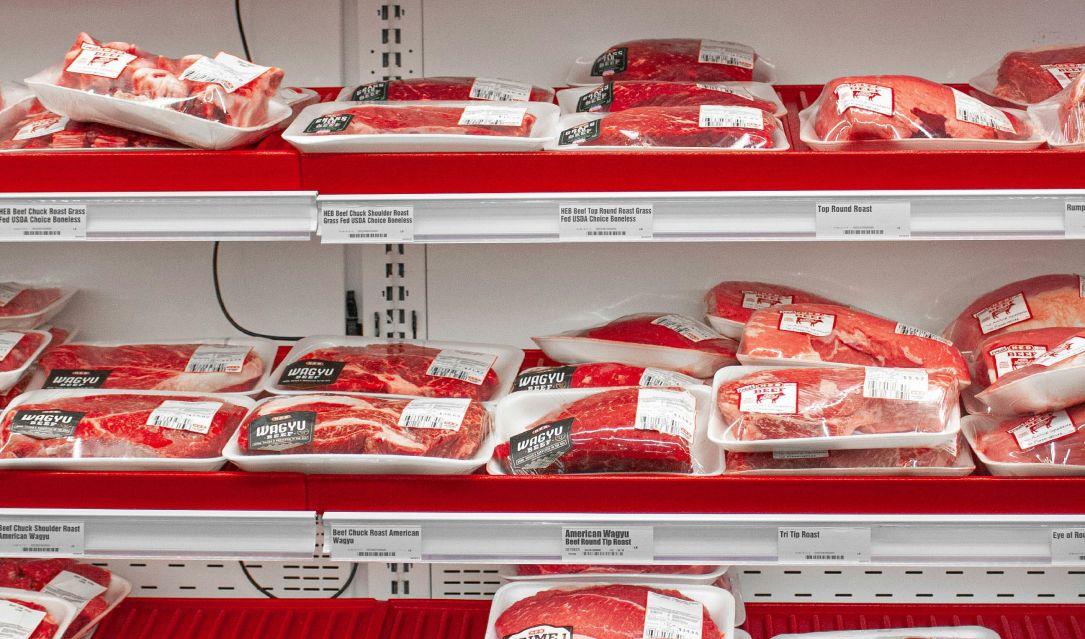
Supermarket and grocery store refrigerator controls across Europe were hacked in the early hours of Monday in the second such wave of attacks in recent weeks — following a first wave in France — with unidentified perpetrators defrosting fridges and causing stock to spoil.

A cyberattack on refrigeration systems has disrupted stores run by multiple supermarket chains across several European countries after hackers remotely changed temperature settings on freezers and cooling systems. [...]

Supermarket and grocery store refrigerators across Europe appear to have been hacked early Monday — the second such incident in recent weeks where attackers have manipulated temperature controls and caused stock to spoil.
The week, in perspective.
Recurring signals, reported impact and system context.
| # | Signal / original source | Reported impact | System context | Stories / sources |
|---|---|---|---|---|
| 01 | Vulnerability exploitationCISA ↗ | ELEVATED42/100 | IT | 99 / 9 |
| 02 | Identity & cloudCISA KEV ↗ | ELEVATED39/100 | IT | 41 / 8 |
| 03 | CVE-2026-106803NIST NVD ↗ | HIGH55/100 | Unspecified | 1 / 1 |
| 04 | CVE-2026-119757NIST NVD ↗ | HIGH55/100 | Unspecified | 1 / 1 |
| 05 | CVE-2026-82907NIST NVD ↗ | HIGH55/100 | IT | 1 / 1 |
| 06 | CVE-2026-54378NIST NVD ↗ | HIGH54/100 | IT | 1 / 1 |
| 07 | CVE-2026-105769NIST NVD ↗ | HIGH53/100 | IT | 1 / 1 |
| 08 | Remote access & edgeCISA ↗ | ELEVATED37/100 | Convergence | 9 / 4 |
Weekly snapshot at the report cutoff. This chart uses the dates above; the rest of the document keeps the selected reporting window.
Composite impact, not CVSS severity or asset-specific risk. Dotted connectors mark measured positions. Unspecified system context stays centered.
3 confirmed active-exploitation signals, 3 critical items, and 3 high-severity items. A balanced view of industrial exposure, critical IT vulnerabilities and security context, ranked by evidence and severity.
2 confirmed active-exploitation signals, 3 critical items, and 2 high-severity items. A balanced view of industrial exposure, critical IT vulnerabilities and security context, ranked by evidence and severity.
4 confirmed active-exploitation signals, 0 critical items, and 5 high-severity items. A balanced view of industrial exposure, critical IT vulnerabilities and security context, ranked by evidence and severity.
4 confirmed active-exploitation signals, 2 critical items, and 5 high-severity items. A balanced view of industrial exposure, critical IT vulnerabilities and security context, ranked by evidence and severity.
ICSA-26-307-01: Subnet Solutions PowerSYSTEM Center
13 items have authoritative exploitation evidence and should move first through exposure validation. Current concentration is around PHP Group, Google, Adobe; use the product context in the queue to compare it with the asset inventory.
Confirm asset, version, reachability and compensating controls for PHP Group.
Review maintenance constraints and vendor guidance for CVE-2026-4052: This issue only impacts deployments where WSO2 Identity Server is configured as a Resident Key Manager with database sharing.
Validate remote access and management-plane controls around the affected technology.
3 confirmed active-exploitation signals, 3 critical items, and 3 high-severity items. A balanced view of industrial exposure, critical IT vulnerabilities and security context, ranked by evidence and severity.
2 confirmed active-exploitation signals, 3 critical items, and 2 high-severity items. A balanced view of industrial exposure, critical IT vulnerabilities and security context, ranked by evidence and severity.
4 confirmed active-exploitation signals, 0 critical items, and 5 high-severity items. A balanced view of industrial exposure, critical IT vulnerabilities and security context, ranked by evidence and severity.
CVE-2026-109618: PHP Memory Corruption Vulnerability
PHP contains an out-of-memory corruption vulnerability that allows for unauthenticated remote code execution. Required action: Apply mitigations in accordance with vendor instructions, ensuring compliance with CISA’s BOD 26-04 Prioritizing Security Updates Based on Risk (see URL in Notes) guidance and CISA’s “Forensics Triage Requirements” (see URL in Notes). Follow applicable BOD 26-04 guidance for cloud services or discontinue use of the product if mitigations are unavailable. Stakeholders are responsible for evaluating each asset's internet exposure and ensuring adherence to BOD 26-04 patching guidelines.
CVE-2026-109619: PHP Stale Internal Request-State Vulnerability
PHP contains a stale internal request-state vulnerability that allows for unauthenticated remote code execution. Required action: Apply mitigations in accordance with vendor instructions, ensuring compliance with CISA’s BOD 26-04 Prioritizing Security Updates Based on Risk (see URL in Notes) guidance and CISA’s “Forensics Triage Requirements” (see URL in Notes). Follow applicable BOD 26-04 guidance for cloud services or discontinue use of the product if mitigations are unavailable. Stakeholders are responsible for evaluating each asset's internet exposure and ensuring adherence to BOD 26-04 patching guidelines.
CVE-2026-111497: Google Brotli Unchecked Return Value Vulnerability
Google Brotli contains an unchecked return value vulnerability that allows a remote unauthenticated attacker to corrupt adjacent decoder state memory, disclose sensitive memory contents, cause a denial of service, or potentially execute arbitrary code using a crafted Brotli-compressed stream. Required action: Apply mitigations in accordance with vendor instructions, ensuring compliance with CISA’s BOD 26-04 Prioritizing Security Updates Based on Risk (see URL in Notes) guidance and CISA’s “Forensics Triage Requirements” (see URL in Notes). Follow applicable BOD 26-04 guidance for cloud services or discontinue use of the product if mitigations are unavailable. Stakeholders are responsible for evaluating each asset's internet exposure and ensuring adherence to BOD 26-04 patching guidelines.
CVE-2026-48356: Adobe Commerce and Magento Unrestricted Upload of File with Dangerous Type Vulnerability
Adobe Commerce and Magento contain an unrestricted upload of file with dangerous type vulnerability that could result in arbitrary code execution in the context of the current user, potentially gaining elevated access or control over the victim's account or session. Required action: Apply mitigations in accordance with vendor instructions, ensuring compliance with CISA’s BOD 26-04 Prioritizing Security Updates Based on Risk (see URL in Notes) guidance and CISA’s “Forensics Triage Requirements” (see URL in Notes). Follow applicable BOD 26-04 guidance for cloud services or discontinue use of the product if mitigations are unavailable. Stakeholders are responsible for evaluating each asset's internet exposure and ensuring adherence to BOD 26-04 patching guidelines.
CVE-2026-97229: GitLab Community Edition and Enterprise Edition Integer Overflow or Wraparound Vulnerability
GitLab Community Edition and Enterprise Edition contain a integer overflow or wraparound vulnerability that could allow an unauthenticated user to execute arbitrary code on the GitLab server via a specially crafted regular expression in a CI/CD configuration, due to insufficient regular expression validation. Required action: Apply mitigations in accordance with vendor instructions, ensuring compliance with CISA’s BOD 26-04 Prioritizing Security Updates Based on Risk (see URL in Notes) guidance and CISA’s “Forensics Triage Requirements” (see URL in Notes). Follow applicable BOD 26-04 guidance for cloud services or discontinue use of the product if mitigations are unavailable. Stakeholders are responsible for evaluating each asset's internet exposure and ensuring adherence to BOD 26-04 patching guidelines.
CVE-2026-76418: Cisco Secure Firewall ASA Software and Cisco Secure FTD Software Unchecked Return Value to NULL Pointer Dereference Vulnerability
Cisco Secure Firewall ASA Software and Cisco Secure FTD Software contains an unchecked return value to NULL pointer dereference vulnerability that could allow an unauthenticated, remote attacker to cause the device to reload unexpectedly, resulting in a denial of service (DoS) condition. Required action: Apply mitigations in accordance with vendor instructions, ensuring compliance with CISA’s BOD 26-04 Prioritizing Security Updates Based on Risk (see URL in Notes) guidance and CISA’s “Forensics Triage Requirements” (see URL in Notes). Follow applicable BOD 26-04 guidance for cloud services or discontinue use of the product if mitigations are unavailable. Stakeholders are responsible for evaluating each asset's internet exposure and ensuring adherence to BOD 26-04 patching guidelines.
CVE-2026-46300: Linux Kernel Missing Initialization of a Variable Vulnerability
Linux Kernel contains a missing initialization of a variable vulnerability that could allow for unintended modification of page-cache-backed data via failure to preserve the shared-fragment marker during socket buffer coalescing, causing ESP input processing to decrypt shared fragments in place. This vulnerability can be chained with CVE-2026-109618 and CVE-2026-109619 to implant PHP webshells and run commands as root. Required action: Apply mitigations in accordance with vendor instructions, ensuring compliance with CISA’s BOD 26-04 Prioritizing Security Updates Based on Risk (see URL in Notes) guidance and CISA’s “Forensics Triage Requirements” (see URL in Notes). Follow applicable BOD 26-04 guidance for cloud services or discontinue use of the product if mitigations are unavailable. Stakeholders are responsible for evaluating each asset's internet exposure and ensuring adherence to BOD 26-04 patching guidelines.
CVE-2024-27834: Apple Multiple Products Improper Authentication Vulnerability
Apple iOS, iPadOS, macOS, Safari, tvOS and watchOS 10.5 contain an improper authentication vulnerability which could allow an attacker with arbitrary read and write capability to bypass pointer authentication. Required action: Apply mitigations in accordance with vendor instructions, ensuring compliance with CISA’s BOD 26-04 Prioritizing Security Updates Based on Risk (see URL in Notes) guidance and CISA’s “Forensics Triage Requirements” (see URL in Notes). Follow applicable BOD 26-04 guidance for cloud services or discontinue use of the product if mitigations are unavailable. Stakeholders are responsible for evaluating each asset's internet exposure and ensuring adherence to BOD 26-04 patching guidelines.
CVE-2026-119977: WordPress WordPress Core Time-of-check Time-of-use (TOCTOU) Race Condition Vulnerability
WordPress WordPress Core contains a time-of-check time-of-use (TOCTOU) race condition vulnerability that could allow unauthenticated attackers to execute code on the server during the upgrade window. This is due to predictable, web-accessible staging paths used during full-package core upgrades. Required action: Apply mitigations in accordance with vendor instructions, ensuring compliance with CISA’s BOD 26-04 Prioritizing Security Updates Based on Risk (see URL in Notes) guidance and CISA’s “Forensics Triage Requirements” (see URL in Notes). Follow applicable BOD 26-04 guidance for cloud services or discontinue use of the product if mitigations are unavailable. Stakeholders are responsible for evaluating each asset's internet exposure and ensuring adherence to BOD 26-04 patching guidelines.
CVE-2026-118527: Ivanti Connect Secure Generation of Predictable Numbers or Identifiers Vulnerability
Ivanti Connect Secure contains a generation of predictable numbers or identifiers vulnerability that allows a remote authenticated attacker to upload files with attacker-controlled content to a known location on disk. This vulnerability can be chained with CVE-2026-104935 and CVE-2026-111357. Required action: Apply mitigations in accordance with vendor instructions, ensuring compliance with CISA’s BOD 26-04 Prioritizing Security Updates Based on Risk (see URL in Notes) guidance and CISA’s “Forensics Triage Requirements” (see URL in Notes). Follow applicable BOD 26-04 guidance for cloud services or discontinue use of the product if mitigations are unavailable. Stakeholders are responsible for evaluating each asset's internet exposure and ensuring adherence to BOD 26-04 patching guidelines.
CVE-2026-41709: Broadcom VMWare ESX Insufficient Logging Vulnerability
Broadcom VMWare ESX contains an insufficient logging vulnerability that could allow a malicious actor with admin access to perform certain operations without being logged. Required action: Apply mitigations in accordance with vendor instructions, ensuring compliance with CISA’s BOD 26-04 Prioritizing Security Updates Based on Risk (see URL in Notes) guidance and CISA’s “Forensics Triage Requirements” (see URL in Notes). Follow applicable BOD 26-04 guidance for cloud services or discontinue use of the product if mitigations are unavailable. Stakeholders are responsible for evaluating each asset's internet exposure and ensuring adherence to BOD 26-04 patching guidelines.
CVE-2026-111357: Ivanti Connect Secure Missing Authentication for Critical Function Vulnerability
Ivanti Connect Secure contains a missing authentication for critical function vulnerability that could allow a local authenticated attacker to escalate their privileges. This vulnerability can be chained with CVE-2026-104935 and CVE-2026-118527. Required action: Apply mitigations in accordance with vendor instructions, ensuring compliance with CISA’s BOD 26-04 Prioritizing Security Updates Based on Risk (see URL in Notes) guidance and CISA’s “Forensics Triage Requirements” (see URL in Notes). Follow applicable BOD 26-04 guidance for cloud services or discontinue use of the product if mitigations are unavailable. Stakeholders are responsible for evaluating each asset's internet exposure and ensuring adherence to BOD 26-04 patching guidelines.
Evidence first.
Context always.
A triage aid for exposure validation and operational review.
Active exploitation is reserved for authoritative confirmation. CVSS alone is never treated as operational risk; exposure, process context and safe remediation remain essential.